A thermal camera shows temperature differences. Wet areas of a roof or ceiling often hold heat differently than dry areas, so they can show up as patterns on the screen.
How thermal imaging works on your roof
Every roof soaks up heat from the sun during the day and gives it off after dark. Dry shingles and decking cool down fast. Wet insulation and wet decking hold that heat much longer. A thermal camera reads those temperature differences and turns them into a color picture, so the wet spots stand out from the dry roof around them — before the leak shows up as a stain on your ceiling.
- We scan at the right time. Usually in the evening, when the difference between wet and dry areas is strongest.
- We fly the roof with a thermal drone. It covers the whole roof without anyone stepping on it, and we can also scan ceilings and attic areas from inside.
- We map the problem spots. The thermal image shows exactly where moisture may be trapped and how big the area is.
- Our team confirms it by hand. We check every suspect spot up close with a moisture meter, then repair only what is actually wet — no guessing and no unnecessary tear-out.
What it helps us find: leaks hiding under shingles or tile, wet insulation on flat and commercial roofs, leaks around flashing, vents, chimneys and skylights, and storm damage that is letting water in.
What it helps with
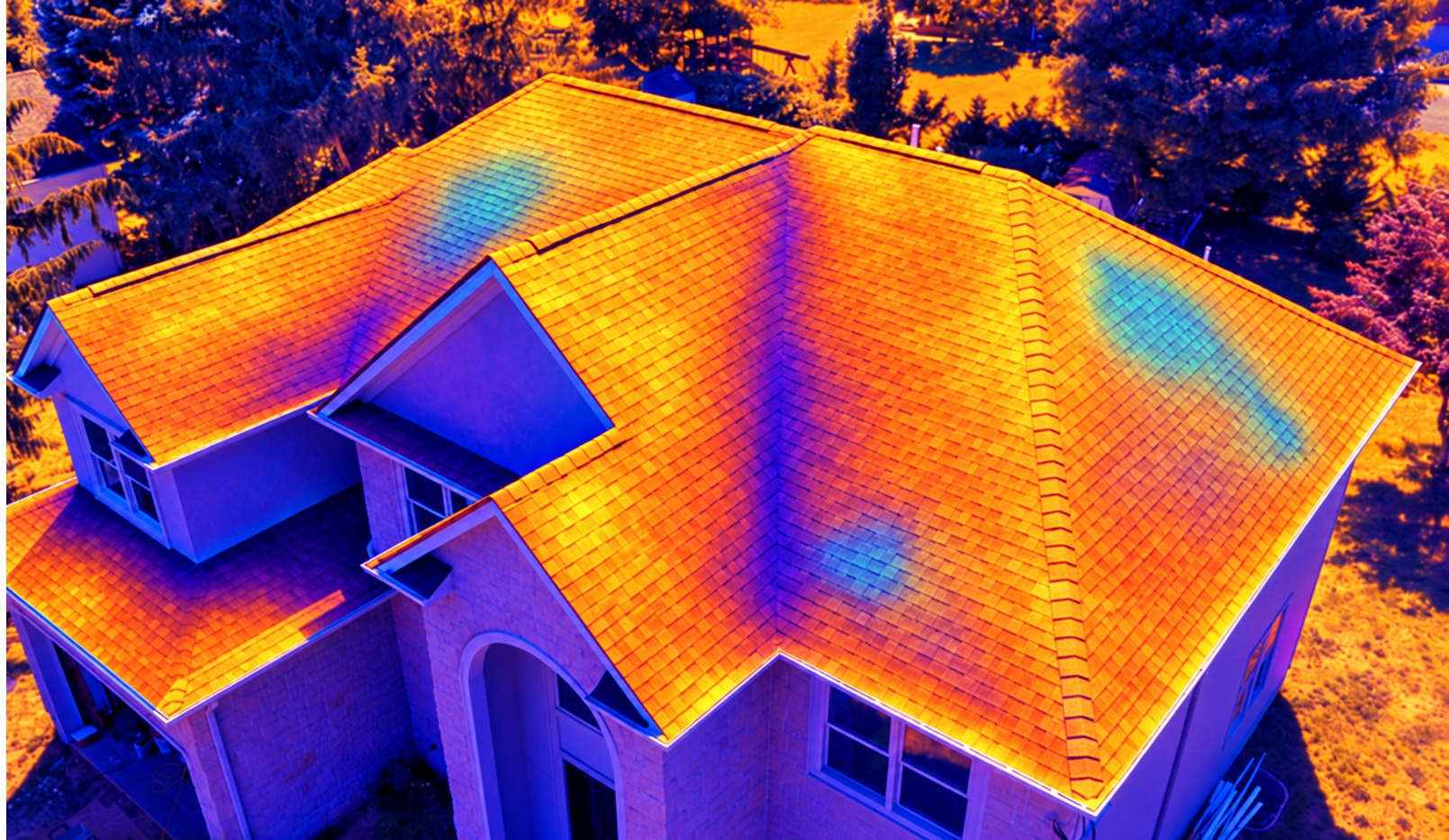
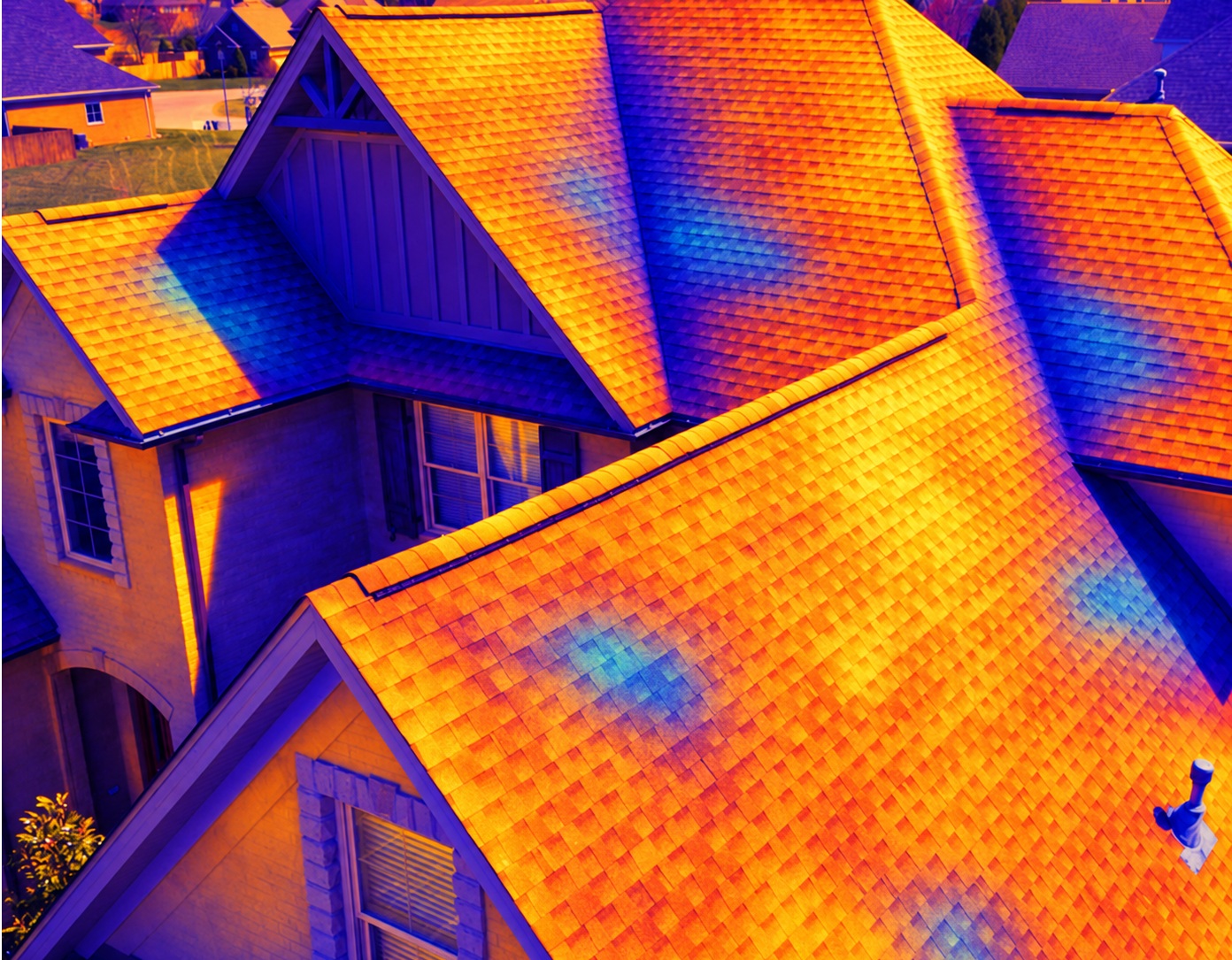
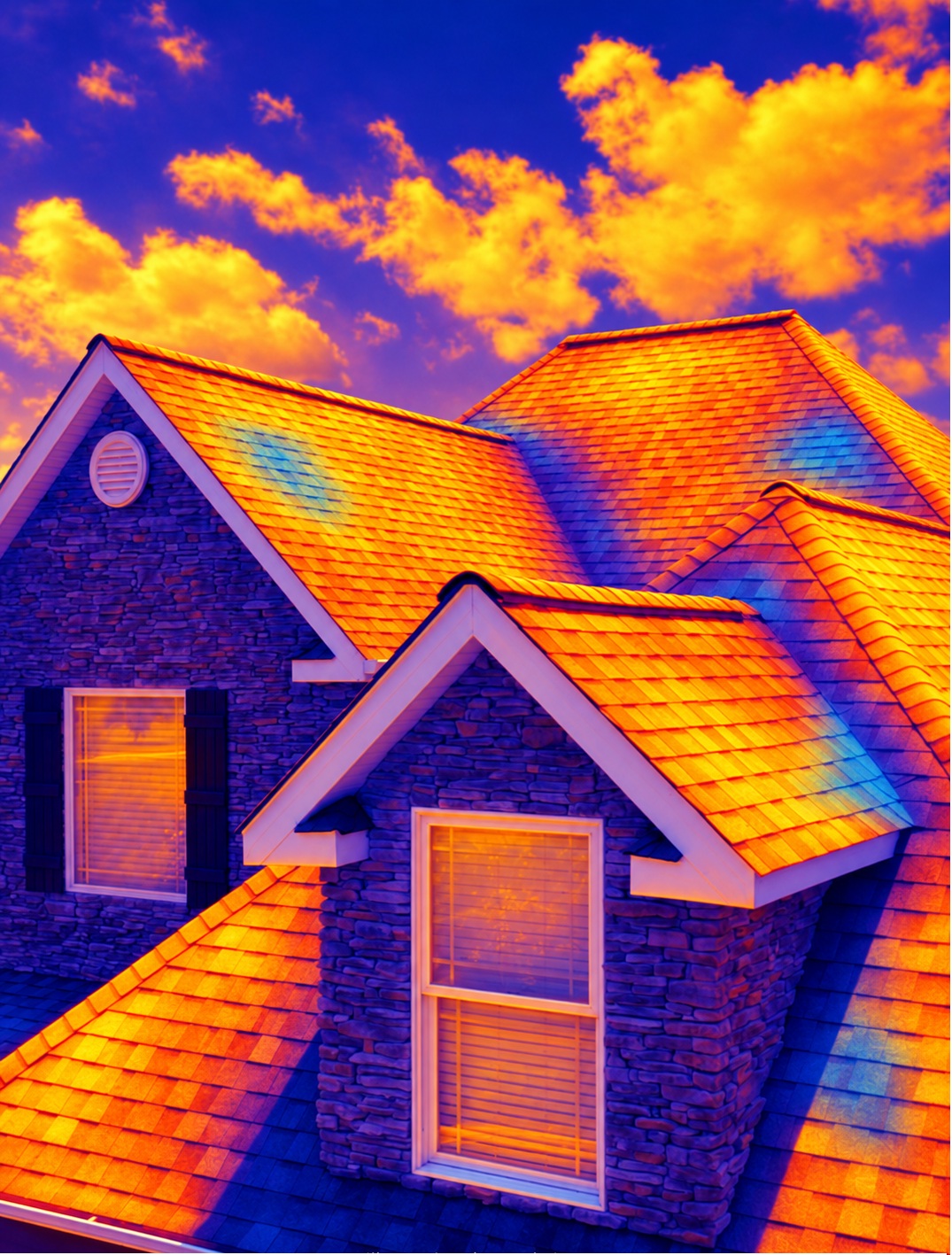
Example thermal images. Cooler blue areas can point to trapped moisture; we always confirm by hand.
- Narrowing down where moisture may be
- Finding wet insulation or decking areas to check
- Avoiding unnecessary tear-out
What it cannot do
It does not see water directly through every roof material, and results depend on weather and time of day. That is why we always confirm with a hands-on check.
Related: Roof leak detection · Drone inspections · all guides
Written by Mike Davis, owner of RezComm Professional Services.
Questions about your roof? FREE drone scan and estimate: 469-249-3221.
Common questions
Does thermal imaging cost extra?
Ask us — it is part of how we investigate leaks.